(Pretty Good Privacy)
Core Concept
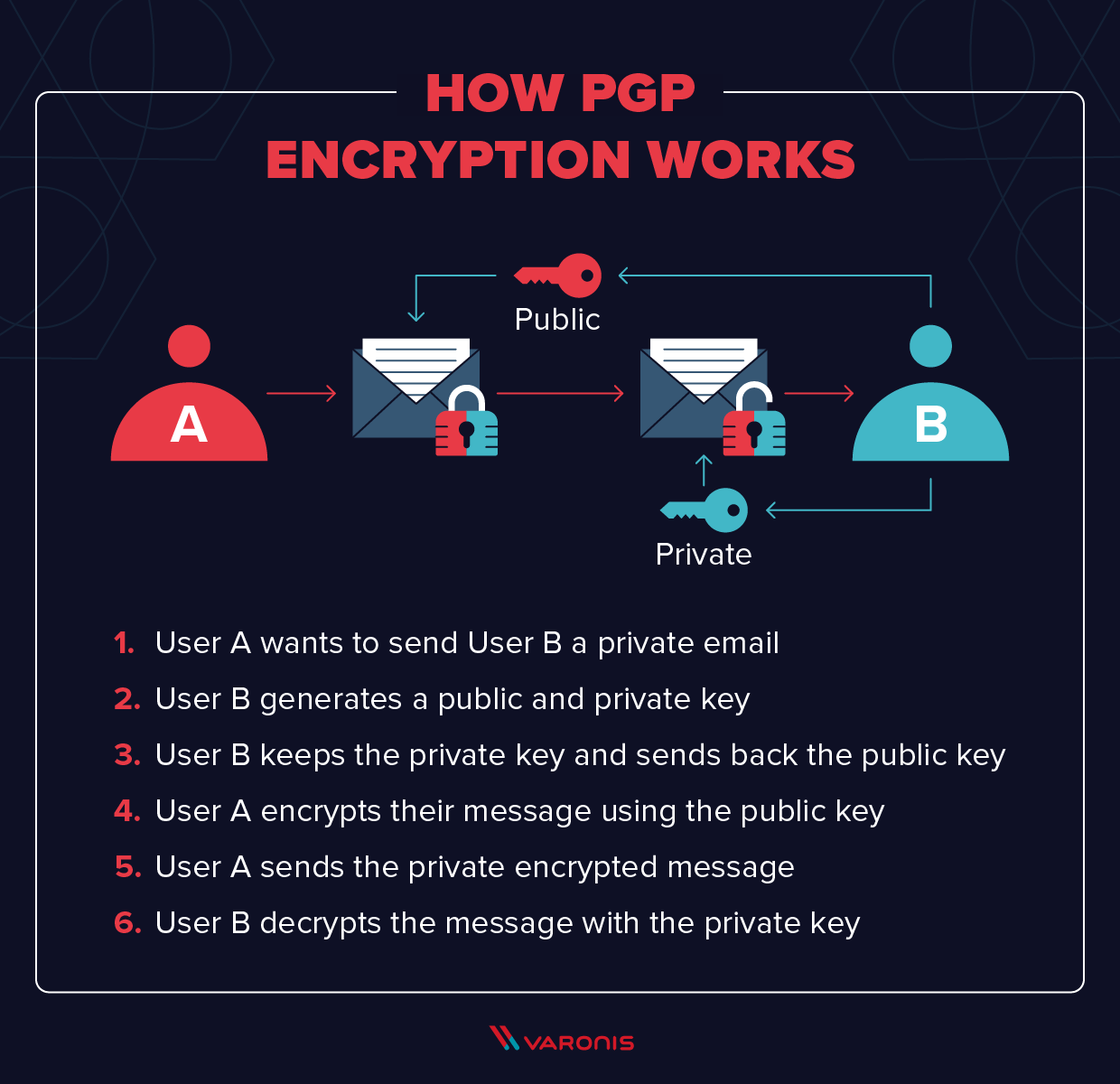
Pretty Good Privacy (PGP) is a standard for data-level authentication and encryption, most commonly used for emails and files. It uses a combination of symmetric and asymmetric cryptography. To encrypt a message for someone, you use their public key. To prove you sent a message, you sign it with your private key.
Key Concepts
-
Web of Trust: This is the key differentiator from PKI. Instead of a central Certificate Authority, PGP uses a decentralized trust model. You choose which keys to trust by personally signing them, creating a “web” of interconnected trust relationships.
-
Key Exchange: Before communication, users must exchange public keys. This is often done via public keyservers or direct exchange.
Exploitation
-
Private Key Hunting: On compromised systems, search for PGP private key files (often
.ascor in the.gnupgdirectory). -
Cracking Passphrases: If a private key is found, it may be protected by a passphrase. Use
gpg2johnto extract the hash and crack it withjohnorhashcat. An unencrypted private key is a critical finding.
gpg
# List existing keys
gpg --list-keys

# Generate a new private key
gpg --gen-key
>Real Name: [Name]
>Email:name@email.com

# Create a new public ASCII PGP key for the private key
gpg --armor --export name@email.com publickey.asc

# Sign messages with your new public key
echo "Test" > message.txt
gpg --clear-sign --output signedmessage.asc message.txt